Clear Product Descriptions
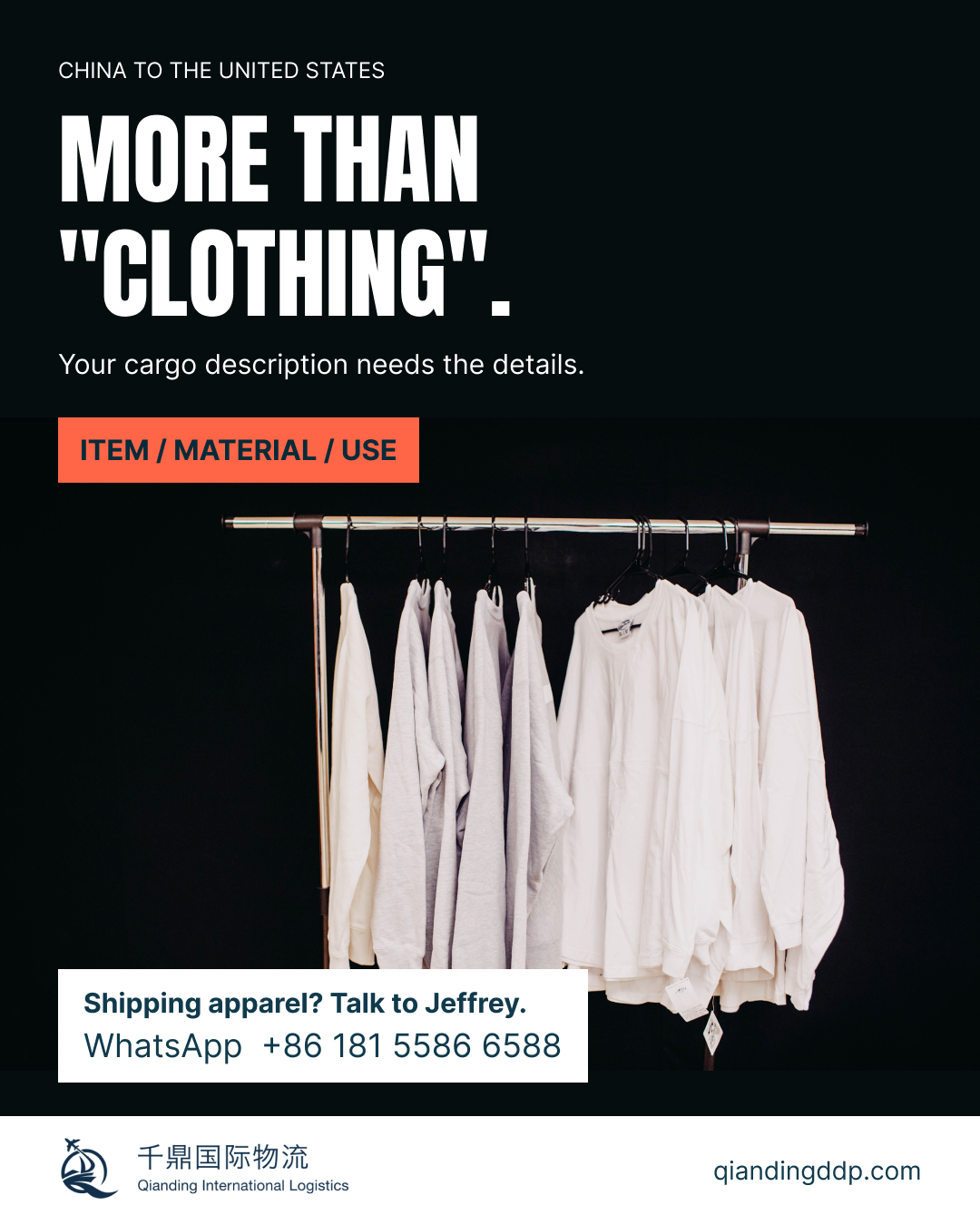
Broad categories such as “clothing,” “parts,” or “accessories” may be true, but they may not describe imported merchandise clearly enough. CBP requires an adequate merchandise description on commercial-invoice documentation, together with quantities and other required information.
A useful description should be based on the supplier-confirmed product specifications, not on a guess by the freight provider. Include the real product type, relevant material or composition, quantity, and intended use when those facts help identify the merchandise.
For example, instead of only writing clothing, a description might read:
Adult knitted T-shirts 100% cotton for everyday wear
This is only an illustration of a more specific description. It is not a required wording for every apparel shipment.
Product photographs can help the supplier, importer, broker, or logistics provider understand what is being shipped, but a photograph does not replace the commercial invoice or other required shipment documents. The written description should match the actual goods and the specifications confirmed by the supplier.
Source U.S. Customs and Border Protection Commercial Invoice Requirements
Prepare one identifiable record per product
Use a product or SKU reference consistently across your files. A reviewer should not need to guess whether the item on the invoice is the same item shown in a photograph or listed inside a mixed carton. Keep supplier-issued documents alongside any summary you create.
Reference: Invoice requirements in 19 CFR 141.86
These are preparation checks, not the complete statutory invoice specification. US invoice rules include additional information depending on the transaction and product. Have the entry preparer confirm the required fields rather than treating this worksheet as a filing form.
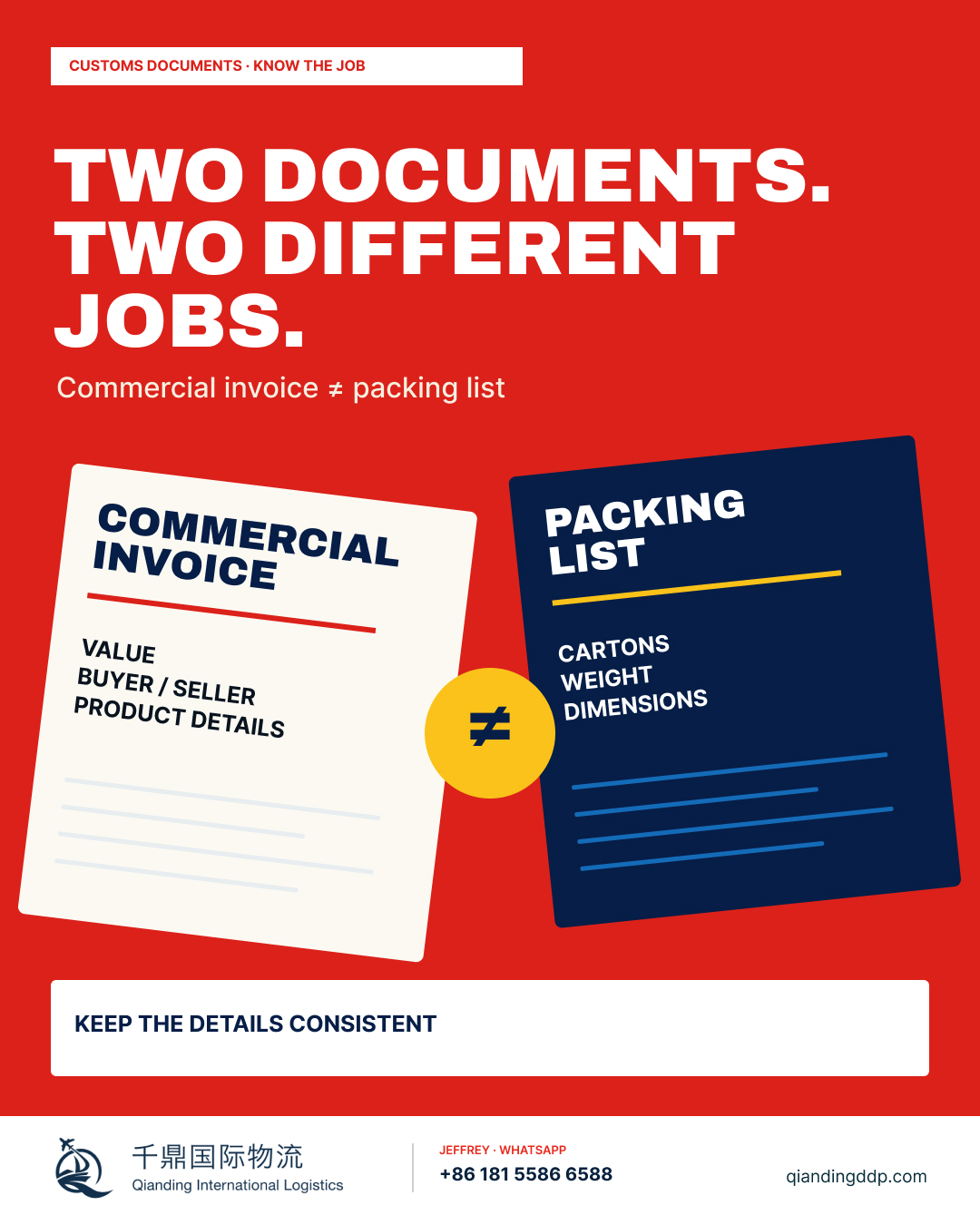
Commercial invoice and packing list do different jobs
The commercial invoice explains the transaction: who sold and bought the goods, what the products are, quantities, values, currency and origin. The packing list explains the physical shipment: which products are in which cartons, together with carton counts, weights and dimensions.
The two documents should agree, but they should not be treated as interchangeable. Keep product names, models, quantities and units consistent so the transaction record can be reconciled with the packed cargo.
Run a consistency check before handover
- Use the same product name and model on both documents
- Explain how pieces, sets and cartons relate
- Confirm the final packed carton count, weight and dimensions
- Show currency and values on the commercial invoice
- Replace superseded versions with clearly dated files
Customs value check
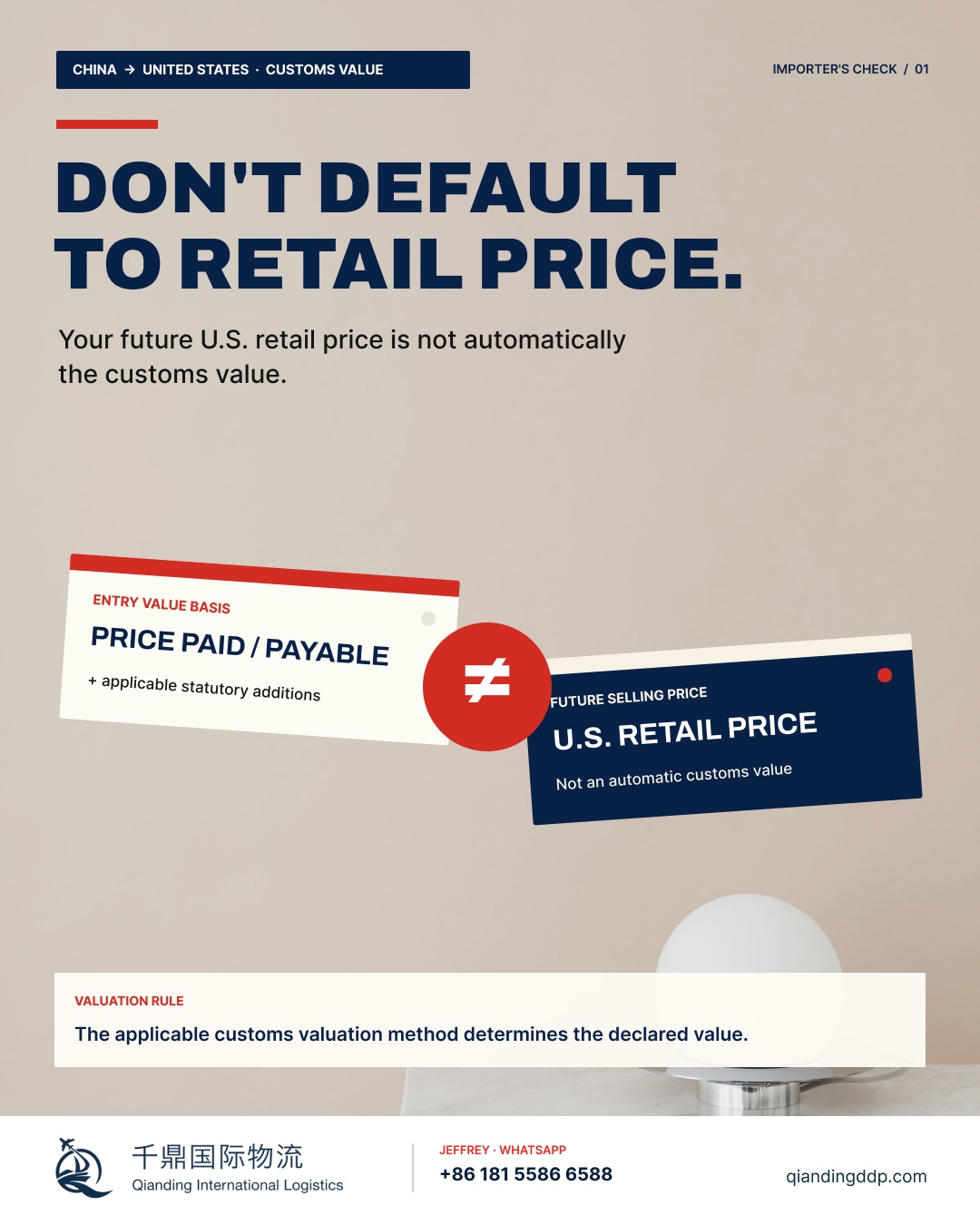
Do not default to future retail price
Your future United States retail price is not automatically the customs value. When transaction value is the proper method, CBP starts with the price actually paid or payable for merchandise sold for export to the United States, plus any applicable statutory additions.
If transaction value cannot be used, another valuation method may apply. The right basis depends on the actual transaction and supporting records. Confirm it before the entry is filed rather than substituting a future selling price without review.
Prepare the valuation question with evidence
- Identify the buyer, seller and sale connected to export to the United States
- Keep the commercial invoice, purchase order and payment records consistent
- Flag assists, packing, commissions, royalties or other additions that may need review
- Explain related-party transactions or situations in which transaction value may not apply
- Ask the entry preparer which method and supporting documents are appropriate
Primary reference: CBP CROSS Ruling H348804. This section is for document preparation and does not replace advice from a licensed customs broker or other qualified import professional.
Confirm Classification
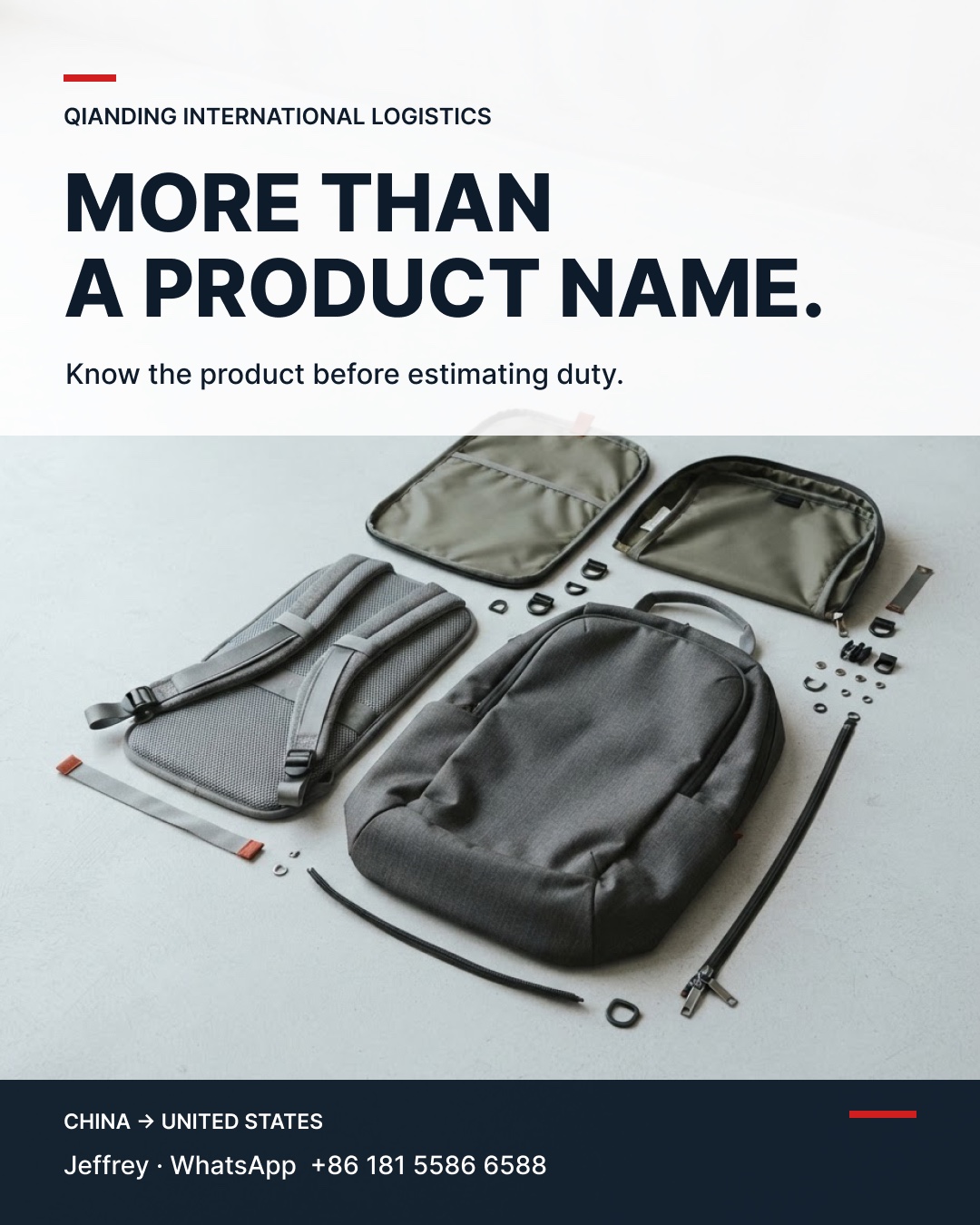
Before relying on a U.S. import-duty estimate, make sure the merchandise is described in enough detail for the appropriate HTS classification to be reviewed. The Harmonized Tariff Schedule of the United States sets out tariff rates and statistical categories for merchandise imported into the United States. A broad supplier name such as “bag,” “accessory,” “part,” or “clothing” may not contain all the facts needed for classification analysis.
Before asking for a duty estimate, collect the clearest available product name and photographs, material or composition, relevant construction details, intended or principal use, country of origin and manufacturer information, and supplier specifications when available. The goal is not to guess an HTS number from a product photograph. It is to give the importer, customs professional or other responsible party enough factual information to review the merchandise against the current HTS.
- Clear product name and product photographs
- Material or composition
- Relevant construction details
- Intended or principal use
- Available supplier specifications or technical sheets

When to consider a CBP binding ruling
If a product is unusual, technically complex, or the appropriate classification remains uncertain before importation, the importer or another interested party may consider requesting a binding ruling from U.S. Customs and Border Protection. CBP's Binding Ruling Program can provide a pre-entry classification decision before the product is imported and entries are filed. CBP states that binding classification advice can only be issued by its Office of Regulations and Rulings.
A binding tariff classification is different from a guaranteed future duty amount. Qianding can use customer-provided product and shipment information to discuss a China-to-United States freight enquiry, but Qianding does not issue CBP binding classifications and does not guarantee an HTS number, tariff rate, duty amount, customs result or clearance outcome.
References: USITC Harmonized Tariff Information; CBP tips on merchandise descriptions; CBP Binding Ruling Program.
Planning a China-to-United States shipment? Send Jeffrey the product, material or composition, intended use, China pickup point and U.S. destination. WhatsApp +86 181 5586 6588
Check the mismatches that cause follow up questions
Illustrative check, not a customer case: an order shows 240 pieces, while the packing list shows 12 cartons. Those numbers do not conflict if the carton breakdown accounts for all 240 pieces. The useful addition is the contents per carton, not a rewritten order quantity.
- Units: state whether a quantity means individual pieces, sets or cartons. Explain the relationship when two files use different units.
- Versions: if the shipment changed, identify the superseded file and send the corrected version to everyone preparing the entry.
- Currency: do not leave a value without its currency or combine currencies into an unexplained total.
- Packing: where several SKUs share a carton, list the contents so the product quantities can be reconciled.
- Descriptions: replace vague labels such as accessories with a factual description of what the item is and how it is used.
Separate shipment preparation from product compliance
An invoice and packing list describe the goods; they do not prove every product requirement has been met. Flag batteries, brand names and product-specific uses early. Ask which supporting documents apply to the actual model and transport method. Do not reuse a certificate from a different model just because the products look alike.
This guide does not provide a universal certificate list. Keep classification, import admissibility and transport acceptance as separate questions for the relevant specialists.
Send a clear file handover
- Give each file a shipment reference and revision date.
- Keep an editable product summary as well as the supporting supplier documents.
- List missing items explicitly instead of leaving the recipient to discover gaps.
- Share sensitive identity or tax documents only through the channel agreed with the authorized recipient. Do not put them in the public inquiry form.
Build your document tracker
A blank working list for collecting files and recording unresolved questions. It is not a commercial invoice or an official customs form.
Download worksheet Excel workbook with English and Chinese sheetsCommon questions
Can I use a product link to start an inquiry
Yes, it can help explain the product. A formal shipment review needs more than the link, including actual quantities, values and packing information.
Should I merge invoices from several suppliers
Keep the original supplier invoices. You can prepare a traceable summary, but the entry preparer should confirm how the invoices will support the shipment. Do not invent a single seller or change transaction values.
What if a packing list changes after I send it
Issue a clearly dated replacement, describe the change and confirm that the person preparing the entry has received it. Do not leave two unlabeled final versions in circulation.
Are FBA labels a replacement for customs documents
No. Receiving labels identify goods for warehouse operations. They do not replace the invoice, packing information or product data needed for the import review.
References
- Invoice requirements in 19 CFR 141.86
- Entry documentation in 19 CFR 142.3
- UPS: International forms and certificates
- FedEx: Create international shipping documents
This guide is for shipment preparation and quote discussion. It is not legal, tax, or customs-compliance advice. The final plan depends on actual cargo data, US regulatory requirements, current route availability, and the written quotation.