Wood packaging check
Check solid wood pallet marks
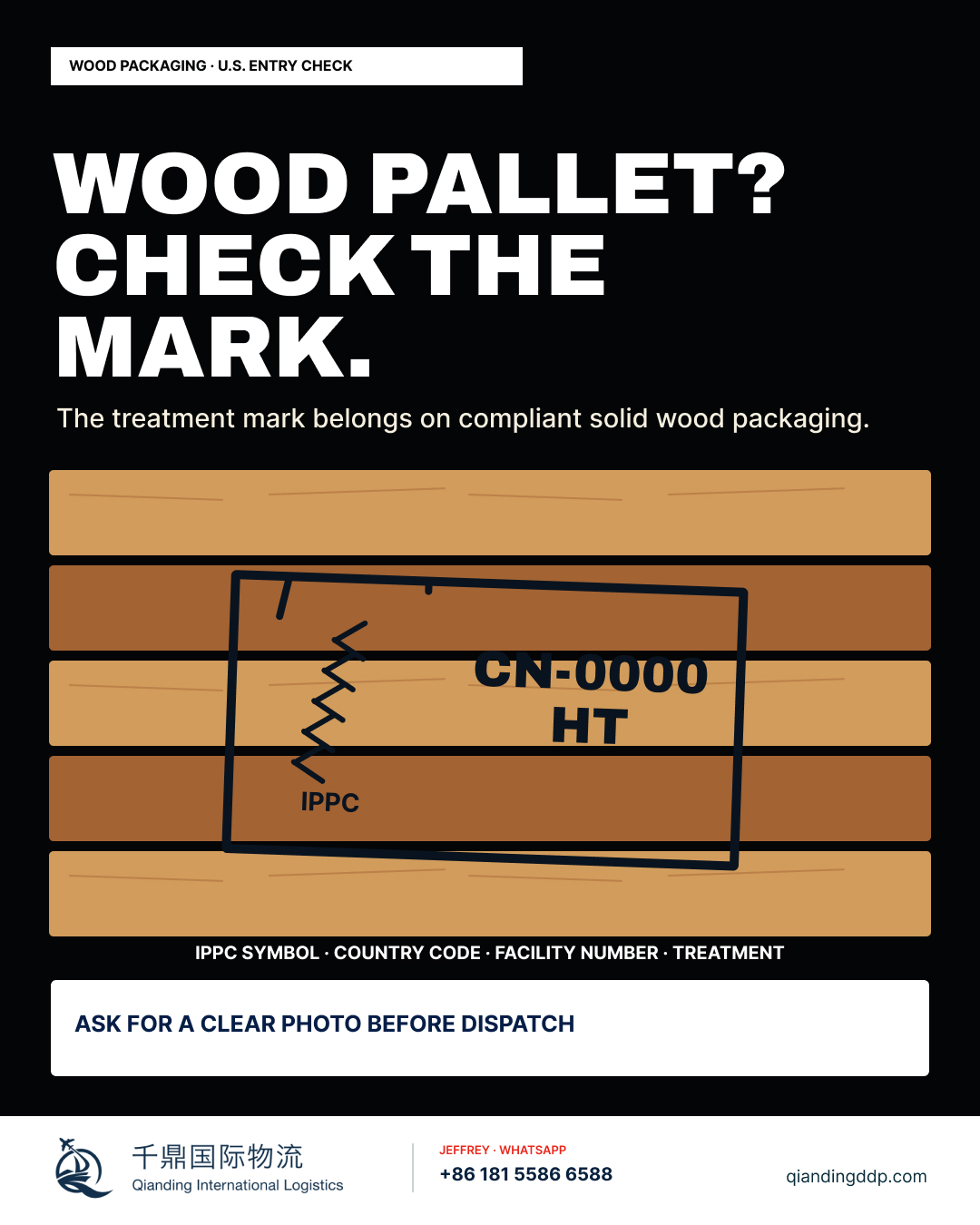
Solid wood packaging entering the United States is subject to wood-packaging requirements intended to reduce pest risk. The requirement can apply to pallets, crates, dunnage and other regulated solid wood packaging. A clear treatment mark on compliant packaging is a practical item to check before cargo leaves the supplier.
Ask for photos of every pallet or wooden package. The mark should be legible and should include the IPPC symbol, country and producer or treatment-provider code, and the treatment code. A mark alone does not prove that every shipment requirement has been met; damaged, bark-covered, unmarked or doubtful packaging should be reviewed before dispatch.
Send these details for a packaging review
- Photos of the complete pallet, crate or wooden support
- Close-up photos of each visible treatment mark
- Packaging material: solid wood, plywood, engineered wood or another material
- Cargo description, carton count and United States destination
- Any supplier treatment or packaging records already available
Final admissibility depends on the actual packaging and current United States requirements. For official requirements, see USDA APHIS guidance for importing wood packaging material.
Food import check
Confirm FDA Prior Notice before arrival
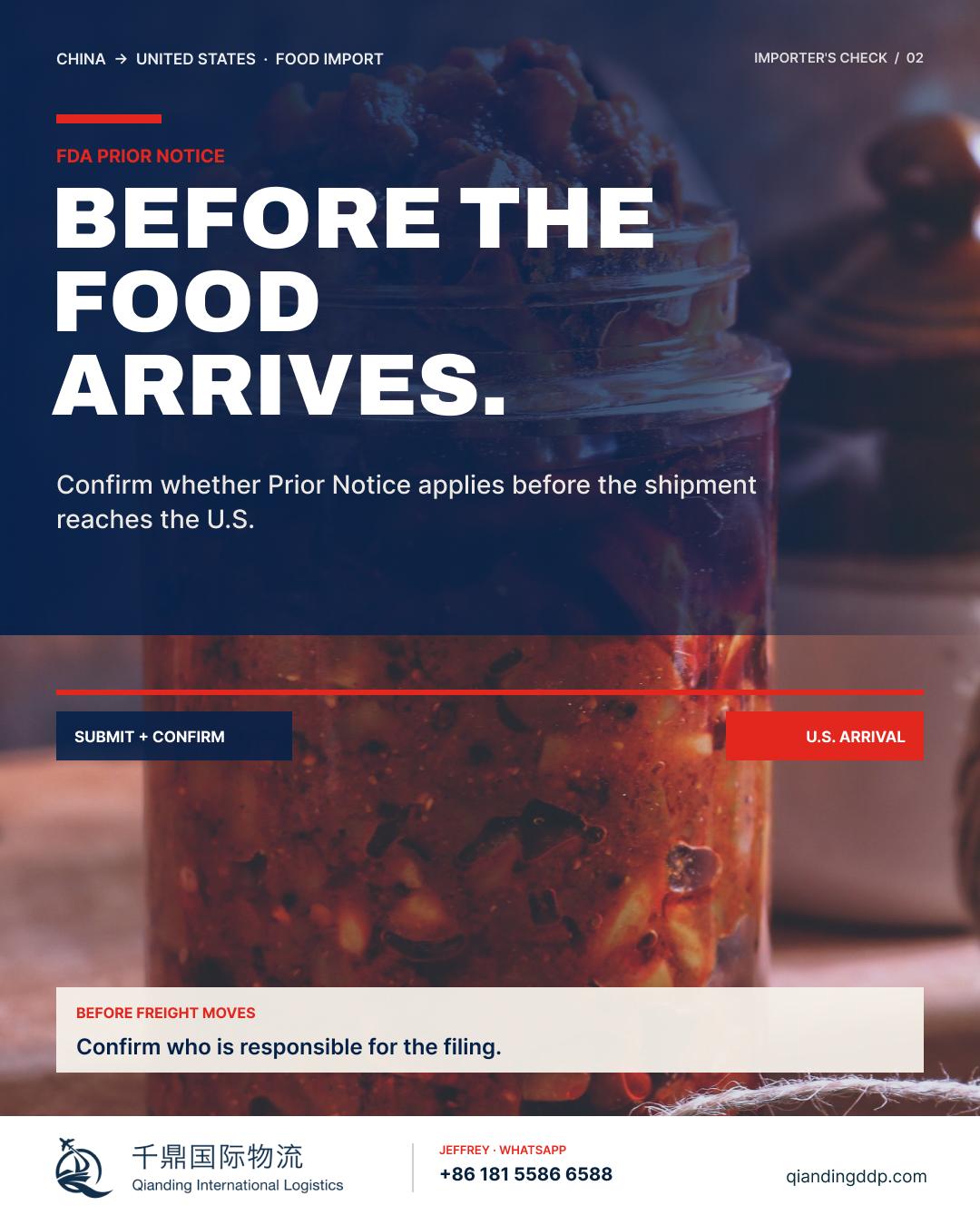
FDA requires Prior Notice for covered food imported or offered for import into the United States before the shipment arrives. This is not a task to leave until after arrival.
The timing depends on how the shipment moves and how the notice is submitted. FDA guidance gives general minimum examples of at least eight hours before arrival by water and four hours before arrival by air. Exceptions and additional conditions can apply, so confirm whether the product is covered and who will submit the notice before dispatch.
Information to confirm before booking
- Exact food product, ingredients, packaging and intended use
- Manufacturer, shipper and United States consignee details
- Mode of transport and expected United States arrival point and time
- Whether an exception applies and who is responsible for submission
- Prior Notice confirmation details when the filing is completed
Qianding does not claim to be the Prior Notice filer. Filing does not guarantee FDA acceptance, customs clearance or delivery timing. See FDA's Prior Notice guidance and FDA's current Prior Notice page.
Children's product check
A supplier test report is not the finish line
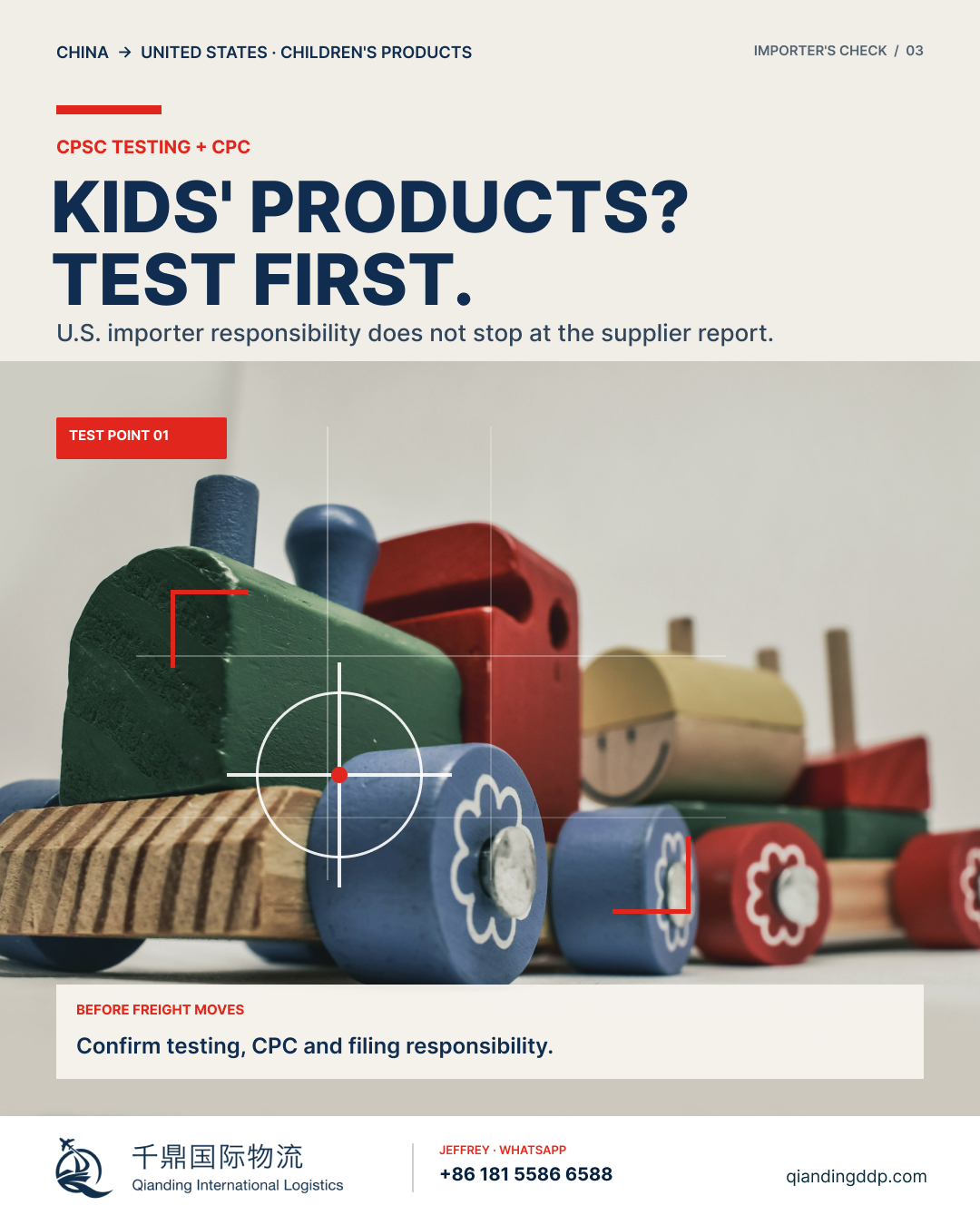
For children's products subject to CPSC safety rules, the applicable testing and certification requirements should be identified before the goods enter the United States market. Supplier or laboratory information can support the review, but it does not by itself complete every importer responsibility.
For products manufactured outside the United States, the importer issues the Children's Product Certificate when one is required. CPSC's certificate eFiling requirement became effective July 8, 2026 for regulated consumer products that require certification. Product-specific rules still determine what testing, certificate data and filing steps apply.
Prepare a product specific review
- Product name, photographs, model and intended age group
- Materials, components, labels, warnings and tracking information
- Applicable laboratory reports and the exact product they cover
- Manufacturer and United States importer identity
- Certificate and eFiling responsibility before the freight moves
Qianding does not perform laboratory testing, issue a CPC or guarantee compliance, customs clearance or marketplace acceptance. Review the CPSC Online Sellers' Safety Guide and CPSC rules requiring third-party testing and certification.
Cosmetics import check
What FDA Registered Means
Facility registration and product listing are separate requirements.
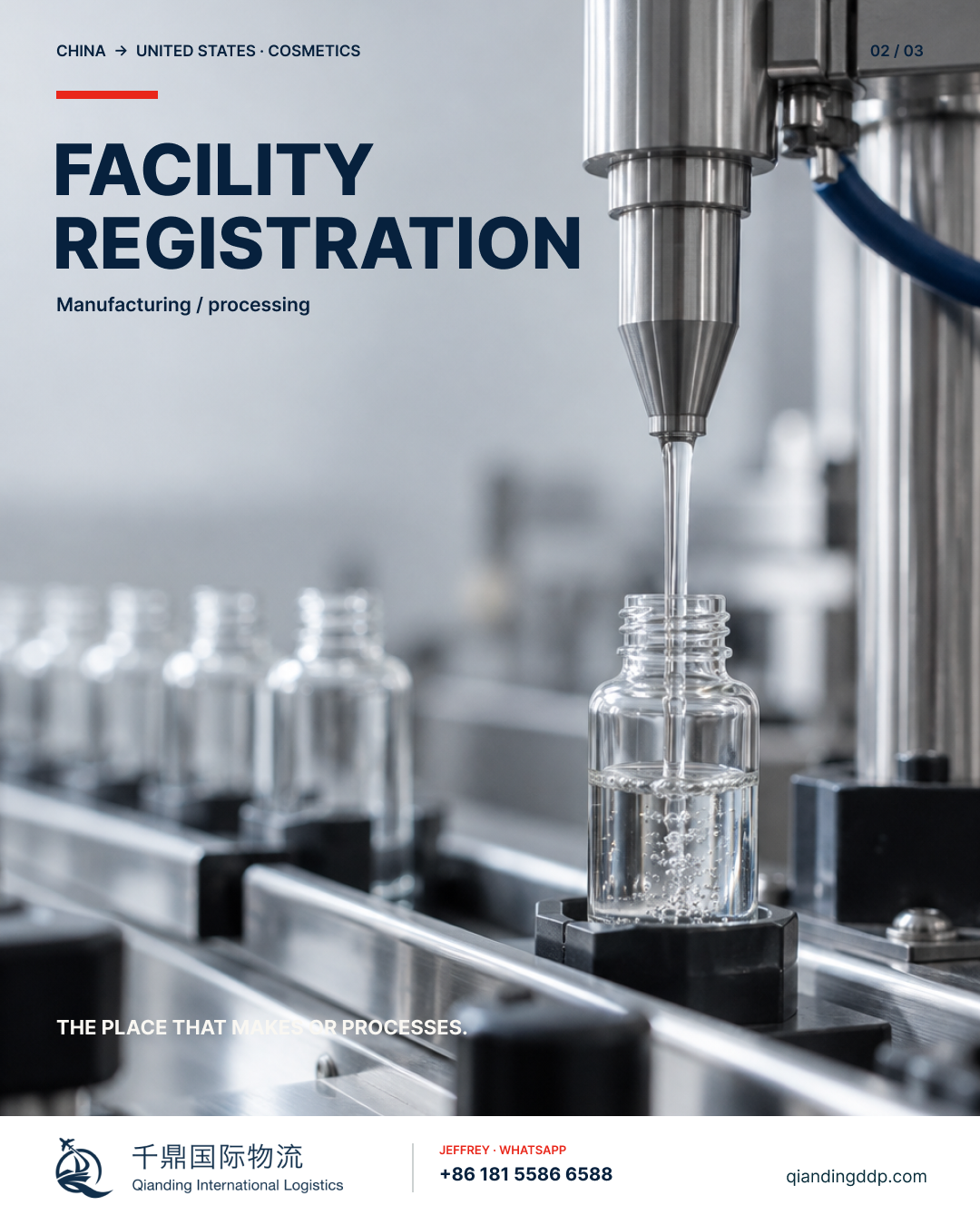
Under the Modernization of Cosmetics Regulation Act of 2022, cosmetic facility registration and cosmetic product listing are separate requirements. Manufacturers and processors that are required to register must register their facilities with FDA and renew every two years. Product listing is handled separately by the “responsible person,” such as the manufacturer, packer or distributor whose name appears on the product label, and the listing must be updated as required.
A supplier saying “FDA registered” is therefore not a complete answer. It may refer to a manufacturing or processing facility, but it does not establish that each finished cosmetic product has been listed. MoCRA also includes exemptions for certain small businesses and certain products or facilities regulated under other FDA frameworks, so applicability should be checked for the specific product and business.
Confirm before the shipment moves
- Whether the supplier is referring to a facility or a product
- Whether the manufacturing or processing facility record is current
- Who is the responsible person named on the product label
- Whether the specific product has the applicable listing and updates
- Whether a statutory exemption applies to that product or business
FAQ: Facility registration is not product listing, and neither process means that FDA has approved the cosmetic. Qianding does not file MoCRA registrations or listings, determine that a customer qualifies for an exemption, or guarantee compliance or customs clearance. Review FDA's cosmetic facility registration and product listing guidance.
Furniture material check
What Is Inside
The material inside determines what buyers should review next.
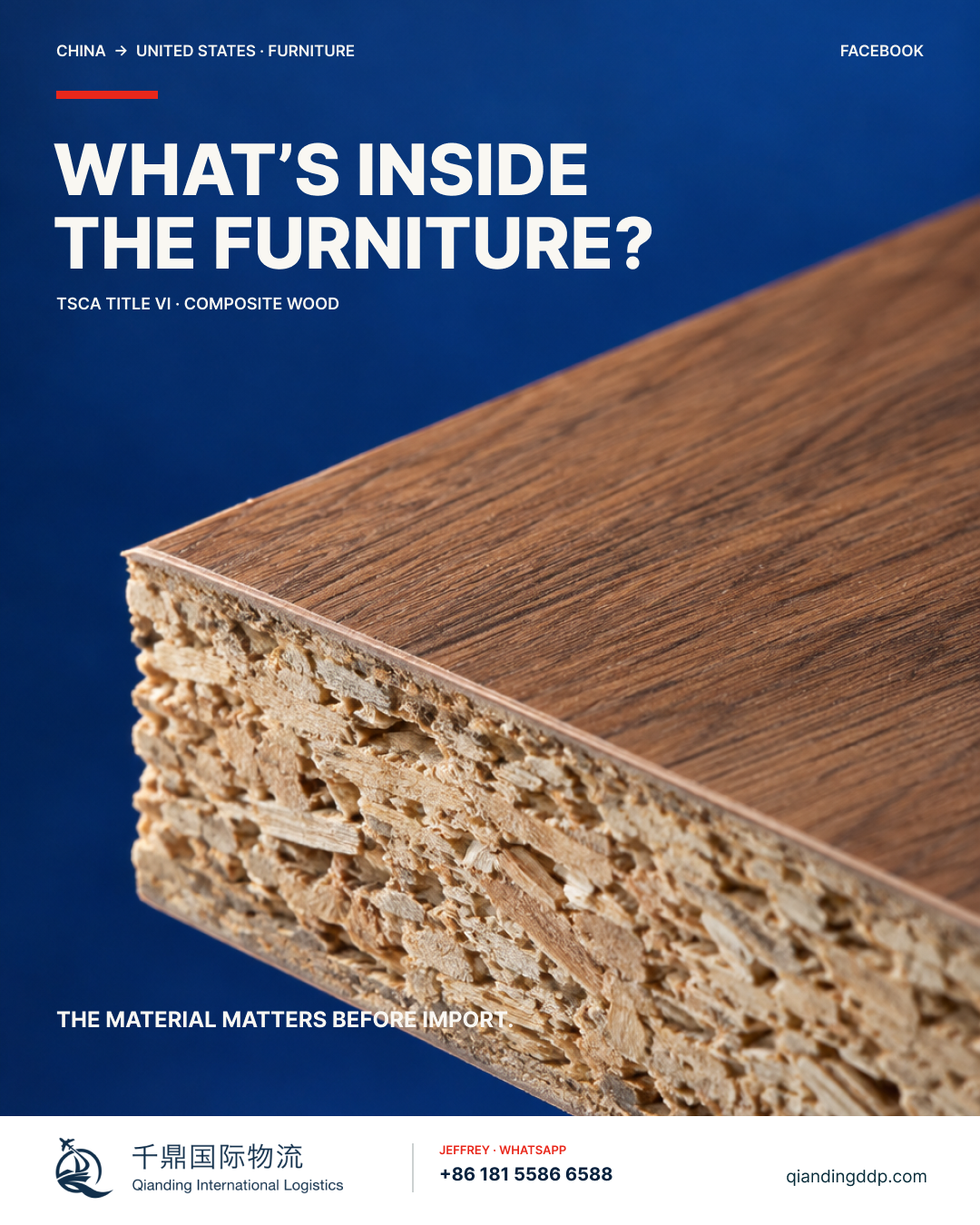
Furniture and home goods may all look like “wood products,” but the material inside can be different. EPA's TSCA Title VI requirements concern specified composite wood products, including hardwood plywood, particleboard, MDF and thin-MDF, and can also apply to component parts and finished goods containing those materials.
When sourcing furniture, cabinets, shelving or storage products from China, a description such as “wood furniture” may not provide enough information. Buyers should identify the actual construction before reviewing applicable certification, labeling and recordkeeping requirements. Not every wood product follows the same rule, and solid wood should not be treated as interchangeable with regulated composite wood.
Ask the supplier for these details
- The exact material used in the product and each major component
- Whether it contains hardwood plywood, particleboard, MDF or thin-MDF
- Applicable supplier compliance statements and certification information
- Commercial and shipping records tied to the product, supplier and purchase
- The records the importer must retain and the required retention period
FAQ: TSCA Title VI does not automatically apply to every item of wooden furniture; relevance depends on the actual material and product construction. For covered products, EPA requires importers to take reasonable precautions and retain specified records. Qianding does not provide material certification, formaldehyde testing or Title VI compliance approval, and does not guarantee admission. Review EPA's TSCA import requirements.