Quick decision table
Customs Bond basics
A Customs Bond is a financial guarantee to U.S. Customs and Border Protection that helps ensure duties, taxes, and fees owed for an import are paid. It is not cargo insurance and it is not the freight charge. Whether a bond is required and which type applies should be confirmed with a licensed customs broker or surety for the actual import.
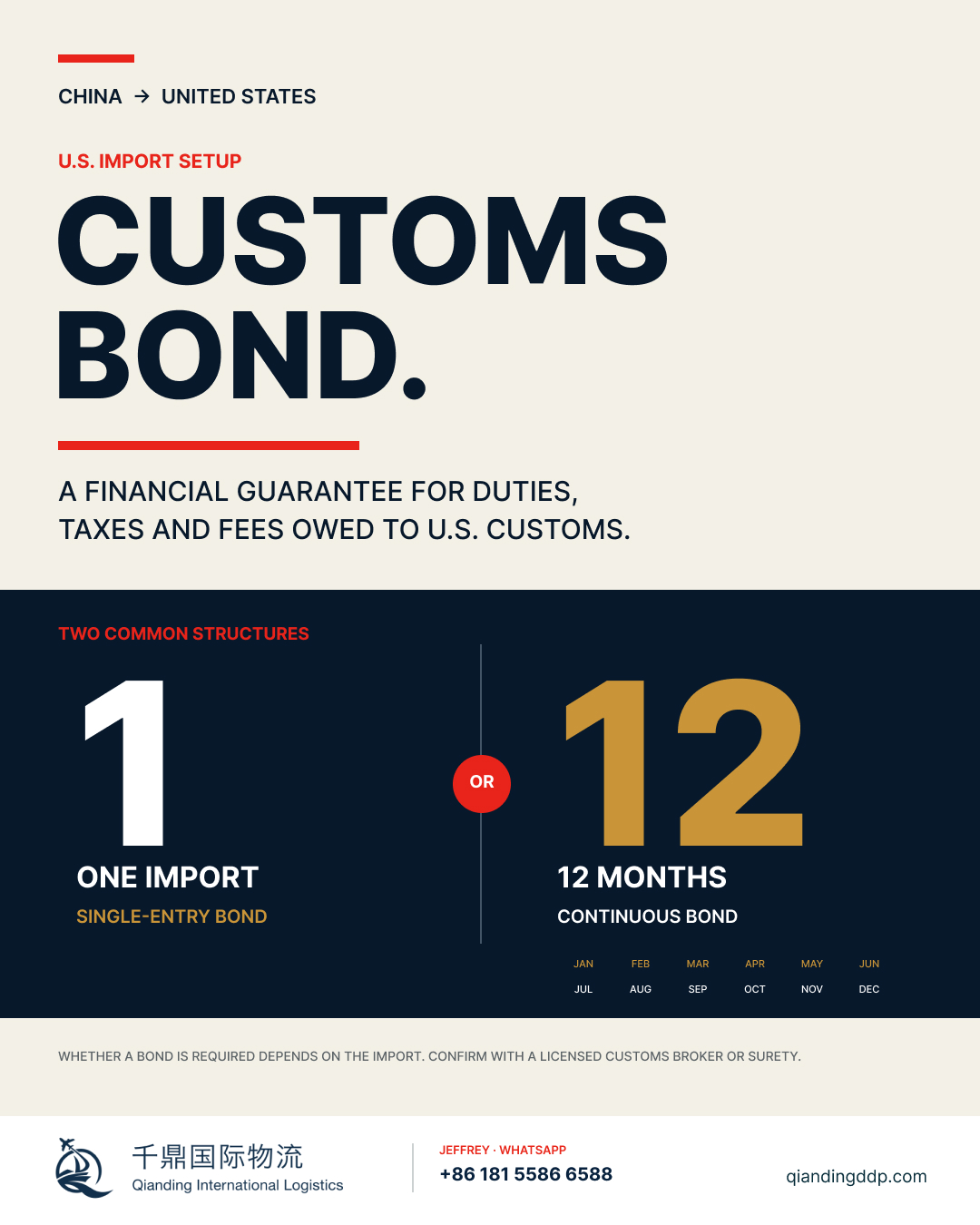
Single entry and continuous bonds
Arranging a Customs Bond
CBP explains that an importer may obtain a bond from a surety licensed by the U.S. Department of the Treasury, or a licensed customs broker authorized to act for a surety may help arrange it. A freight forwarder coordinates transport and should not decide the bond type solely from the freight plan; the written quote should state whether a bond arrangement is included and who is responsible.
What to confirm with a broker or surety
- Who will act as the importer of record or entry party
- Whether this is one entry or recurring import activity over twelve months
- Cargo description, declared value, origin, and any special regulatory conditions
- Whether the quote includes the bond and who buys, maintains, or renews it
Identify the Importer of Record before the shipment moves
The Importer of Record is a responsible party in the United States import entry, not a blank to fill after cargo departs. The actual arrangement should identify who supports the entry, supplies truthful transaction and product information, and responds to duties, documents or compliance questions.
Do not assume that writing "DDP" on a quote removes the need to identify the import arrangement. Confirm the party and the service boundary in writing before booking, especially when a seller, buyer, customs broker and freight forwarder are all involved.
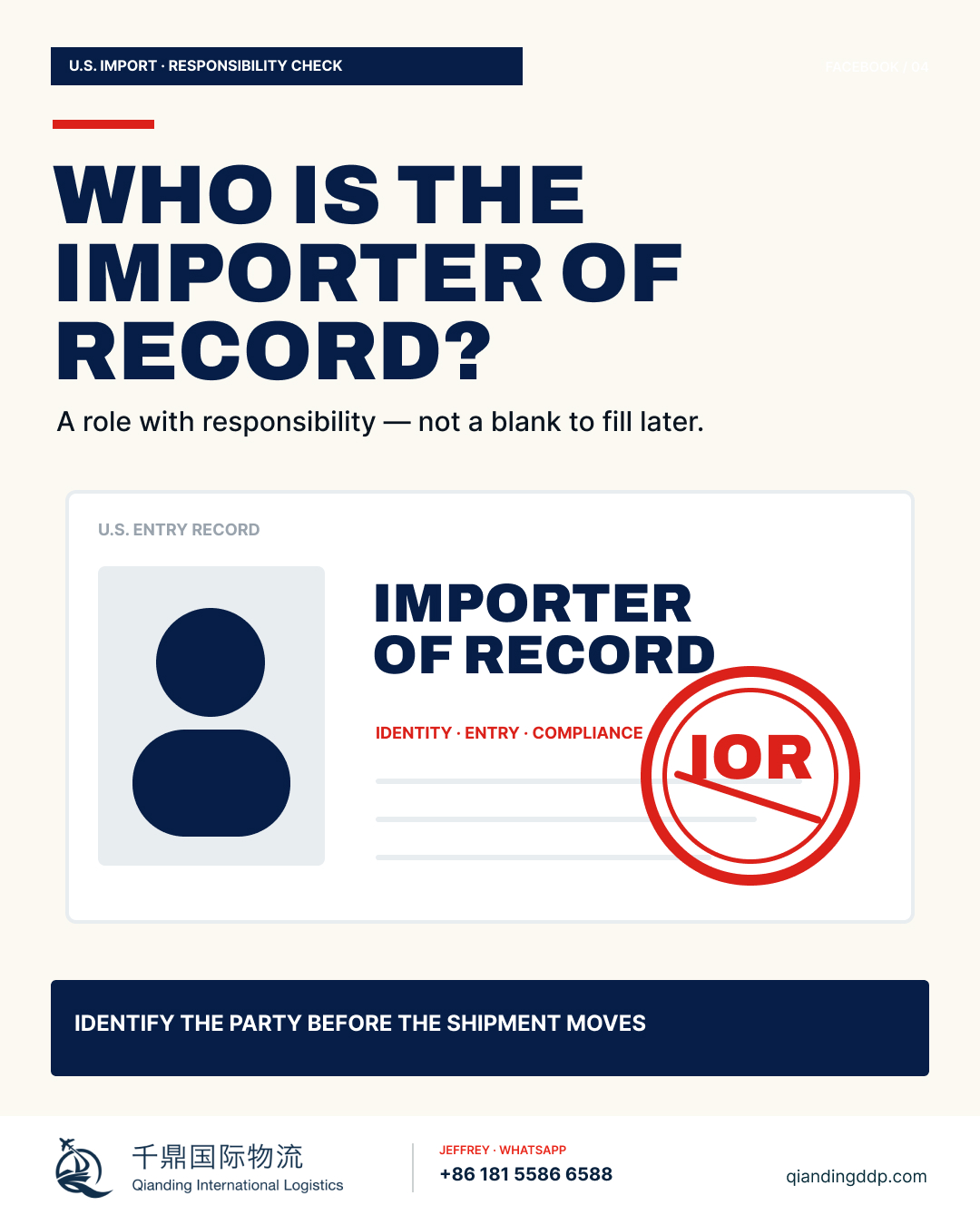
Confirm these points before booking
- Who is identified as the import-responsibility party
- Who authorizes and communicates with the licensed customs broker
- Whose identifiers and transaction records support the entry
- Who provides product, value, origin and classification information
- Which clearance, bond, duty and exception items are included in the quote
The correct structure depends on the actual transaction and entry. Ask a licensed customs broker or qualified customs adviser to confirm legal obligations for the shipment.
Confirm Importer Number
A U.S. business usually uses its IRS Employer Identification Number (EIN) as its importer number. An individual may use an SSN. When neither is available, a CBP-assigned number may be requested using Form 5106, which CBP uses to create or update importer identity information.
Before a formal entry, confirm with the licensed customs broker which importer identity the entry will use and whether the record is current. Do not post an actual EIN or SSN in public comments or send it through an unapproved channel.
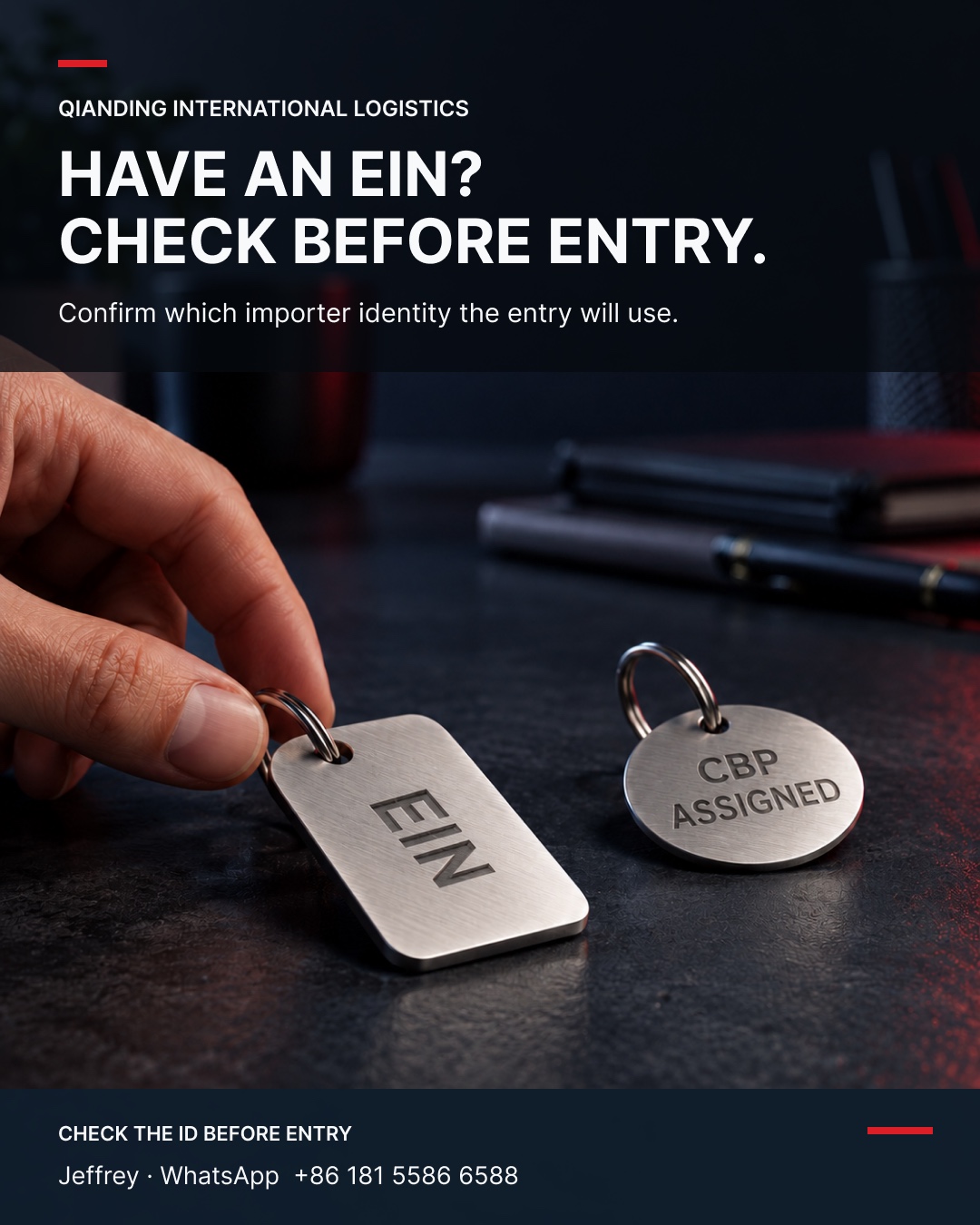
Qianding can explain where importer identity fits in the freight handoff, but it does not issue, validate, store, or guarantee an importer number, file Form 5106, or guarantee entry or clearance.
Primary references: CBP Importer Numbers; CBP importer identification guidance; CBP Form 5106.
Customs Broker POA Should Be Direct
A customs power of attorney authorizes a licensed customs broker to conduct customs business in the client's name. CBP guidance says the broker should execute that POA directly with its client, rather than obtaining it through a freight forwarder or another third party.
Using a broker does not remove the importer's ultimate responsibility for the entry or for reasonable care. The transaction structure can differ when the broker is itself the importer of record, so the parties should confirm the actual arrangement with the licensed broker before filing.
Qianding can coordinate shipment information and explain the freight-service handoff, but it does not act as the customs broker, review or store the broker's POA, or guarantee the broker, duty amount, timing, compliance result, or clearance outcome.
Primary references: CBP Customs Broker Guidance v2.0; CBP HQ ruling H350722.
Practical steps
- Confirm whether the shipment uses DDP, DAP/DDU, FOB, or another term.
- Confirm the US receiver, import responsibility party, and clearance arrangement.
- Check whether the quote includes US clearance, duties, final delivery, and possible charges.
- Flag branded, battery, or special goods before booking.
- Before order confirmation, record payer, service inclusions, and exception handling in writing.
What can change the answer
- Who acts as import-responsibility party
- Whether a bond is separately needed or included in the route
- Cargo value, product category, and regulatory requirements
- Whether quote inclusions and exclusions are clear
How Qianding can help
- Explain how parties cooperate under the DDP plan
- Confirm clearance and delivery path by cargo and destination
- Remind customers to confirm import responsibility and document needs
- State service boundaries in the formal quote
What the customer should prepare
- Confirm receiver and trade term
- Provide truthful cargo and transaction documents
- Confirm payer and contract party
- Understand DDP is not a way to avoid truthful import responsibility
Operational sample
Operational sample: a customer ships to a US commercial warehouse but is unsure who handles import responsibility. Qianding first clarifies the DDP service boundary, then matches clearance and delivery arrangements based on cargo and destination.
FAQ
Does DDP mean there is no IOR?
No. Import responsibility and filing arrangements still exist, even if different parties cooperate within a DDP service plan.
Are customs broker and forwarder the same role?
Not always. Brokers focus on entry filing; forwarders focus on freight and operational coordination.
Who arranges the Customs Bond?
Importers generally obtain a Customs Bond through a U.S. Treasury-licensed surety, and a licensed customs broker may help arrange it. The need and bond type depend on the actual import.
My U.S. company already has an EIN. Do I need a separate customs importer number?
Usually, the EIN itself is the importer number for a U.S. business. An individual may use an SSN. When neither is available, a CBP-assigned number may be requested using Form 5106. Confirm the current identity and entry arrangement with the licensed customs broker before filing.
Why does the customs broker ask the importer to sign the POA directly?
CBP guidance says the broker should execute the POA directly with its client before conducting customs business in the client's name, rather than through a freight forwarder or another third party. The importer remains ultimately responsible. A different rule can apply when the broker is itself the importer of record.
Why clarify roles in advance?
Unclear roles can affect duties, exams, documents, and exception responsibility.
Sources
- U.S. Customs and Border Protection: Basic Importing and Exporting
- CBP: Customs Brokers
- CBP Help Center: How to obtain a Customs Bond
- CBP Form 301: Customs Bond
- CBP Help Center: Importer Numbers
- CBP Help Center: Importer identification number guidance
- CBP Form 5106: Create/Update Importer Identity Form
- CBP: Customs Broker Guidance v2.0
- CBP HQ ruling H350722
- International Trade Administration: Know Your Incoterms
This guide is for shipment preparation and quote discussion. It is not legal, tax, or customs-compliance advice. The final plan depends on actual cargo data, US regulatory requirements, current route availability, and the written quotation.